Returns Handling in Poland for EU E-commerce Brands
Every EU consumer can send an order back within 14 days, no reason given. What it costs you depends on what happens after the parcel comes back. We run returns handling in Poland for brands shipping across the EU: one returns address for all 27 markets, every item inspected against your criteria, the outcome written back to your sales channel.
Write to us in English, we reply in English.
Every item inspected against your criteria
Back to stock, repack, quarantine or dispose
Outcome synced to your sales channel
A4 Returns from every EU market, one warehouse in Poland
Why returns handling is the first question before selling into the EU
A brand entering the EU plans its outbound flow in detail and leaves returns as a footnote. Then the first German or French customer sends something back and the footnote becomes the process: where does the parcel go, who checks it, is the item for sale again. Reverse logistics is where good outbound setups quietly fall apart.
-
The 14-day clock is law, not policy
Directive 2011/83/EU gives every EU consumer 14 days to withdraw from a distance contract, and many brands extend it. The parcel is coming; your refund waits on someone confirming what came back. -
Distance turns a small problem into a big one
a returns address in every country means stock scattered in places nobody inspects. One EU returns address in Poland means every item is judged in one place, the same way. -
Condition is a judgement, and it has to be recorded
an unopened item can go back on the shelf; a broken seal or a missing part cannot. Someone has to make that call against written criteria and log it. -
A return not booked back is a lost sale
the item sits in a warehouse but is invisible to your shop. Stock accuracy is the part of ecommerce returns management brands notice only when it fails.
What sits behind the returns process
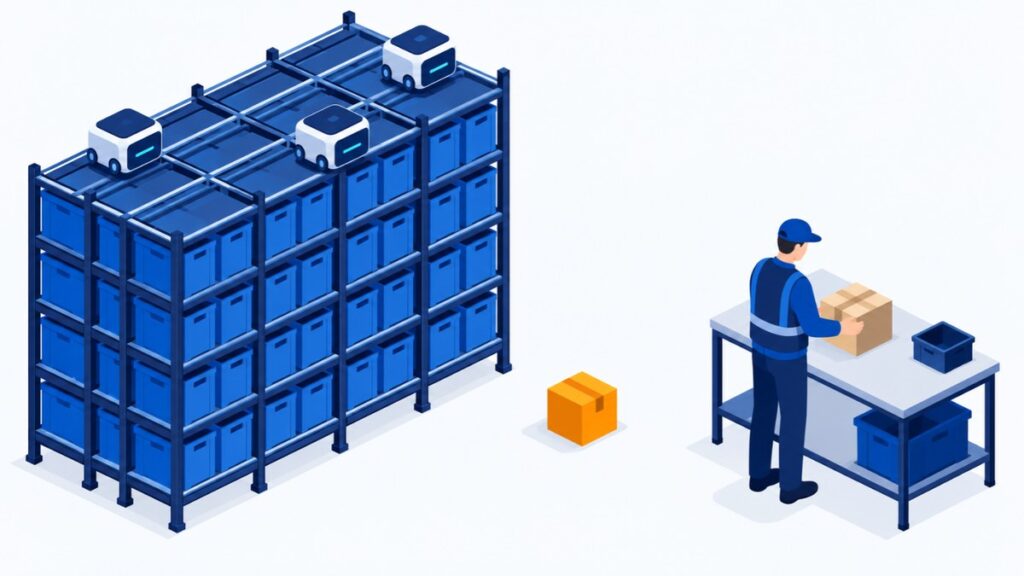
Returns run through the same warehouse, team and system as your outbound orders, with no separate depot.
Refunds stay with you as the seller: we confirm what came back and in what condition, you decide the money. We are the fulfilment operator, not the merchant of record.
What happens in the first hour after a return lands on our dock
The sequence is the same for every return. How long each step takes depends on the product and the inspection depth you ask for, so we describe the order of events rather than promise a stopwatch.
Received and identified
Opened in the returns area, not on the outbound line. The RMA or order number ties the parcel to its order in our WMS.
Inspected against your list
Condition, completeness, seals, signs of use, and whether the return sits within your policy. The list is yours, agreed at onboarding.
Outcome decided
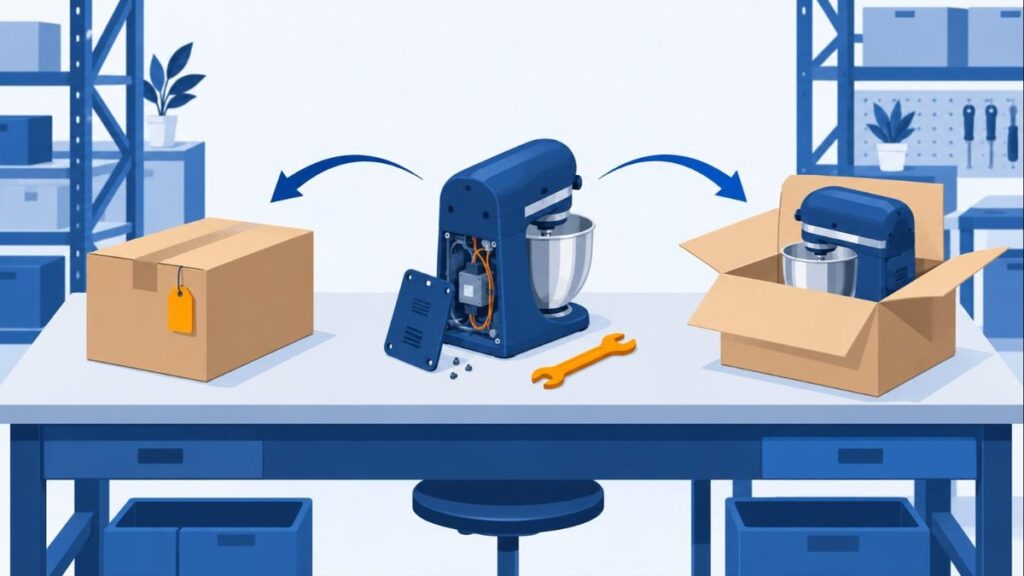
One of four: back to stock, repack, quarantine for your decision, or dispose and recycle per your instructions.
Stock and status updated
Sellable items are booked back to their location; the return status flows to your sales channel through the integration.
Reported to you
Per-item outcome, and the reason where the customer gave one, so you can refund with confidence and see what keeps coming back.
Four outcomes for every return, and who decides each one
Most disputes over returns come down to one thing: an item went back on sale that should not have, or was binned when it could have sold. We allow four outcomes, each triggered by a rule you have written.
Where a returned item can go, and what triggers it
Unopened, complete, undamaged, within any date rule you set. Booked back to its location and for sale again in your channel.
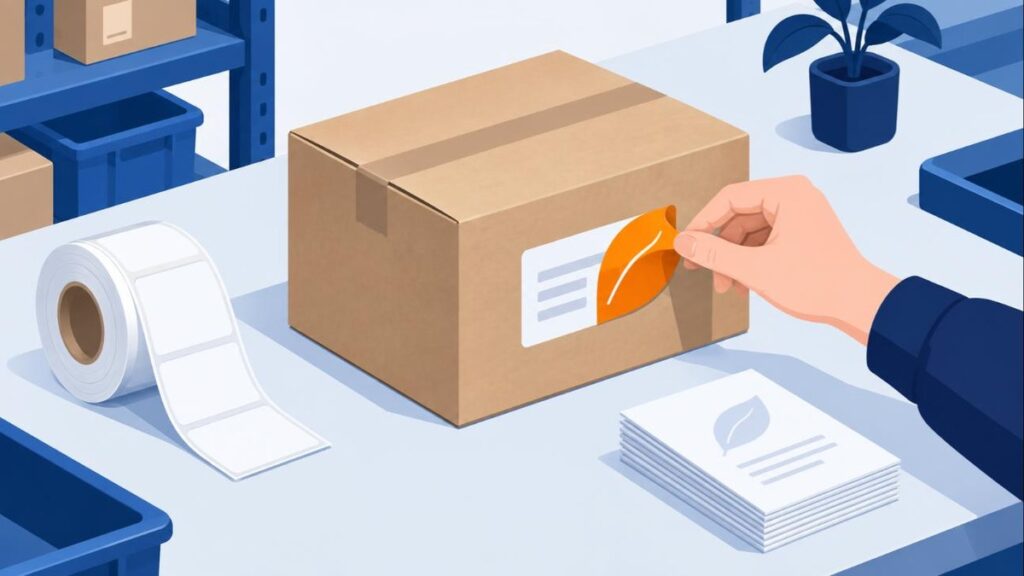
The product is fine, the packaging is not: torn polybag, crushed carton, missing insert. Repacked to your specification, relabelled if needed, back as sellable.
Anything your criteria do not clearly settle: light signs of use, a set missing one component, a claimed fault. Held separately and reported. Nothing in quarantine is sold.
Items you have ruled out of resale: broken seals on cosmetics, opened supplements, damage beyond repack. Per your written instruction, in line with applicable standards, logged.
What we do not do: repair products. Refurbishment here means new packaging, a clean outer pack and relabelling.
Returns of cosmetics and supplements: the seal decides, not the invoice
For most goods, condition is a matter of degree. For anything applied to the skin or swallowed, it is binary: sealed or not. The site is Sanepid-approved and runs HACCP-based procedures.
Cosmetics
An opened jar or a broken hygiene seal never returns to stock. Sealed, undamaged, in-date items can, with batch and shelf-life data checked first. More on our cosmetics fulfillment in Poland page.
Supplements
Same rule, stricter clock. Sealed product with sensible remaining shelf life rejoins FEFO picking; opened, damaged or short-dated product is separated out and reported. Our supplement fulfillment in Poland page covers the date handling in detail.
Everything else
Apparel, accessories, hard goods, home: inspection is condition and completeness, and repack is the outcome that saves the most sales. Second-choice or outlet routing follows your rule.
One EU returns address in Poland instead of a return point in every country
Ecommerce returns management across Europe usually goes wrong at the address. A brand selling into six countries ends up with six drop points and no single view. We give you one: the returns address on every label, from every EU market, is our warehouse in Poland.
-
One address, 27 markets. A customer in Germany, France, Italy or Spain sends the parcel back to the warehouse the order left from, with no customs stops inside the EU.
-
Return shipping at cost. Carrier costs, outbound and return, are re-invoiced 1:1 with no margin.
-
Same stock pool. A return from Italy goes back into the pool that ships to Germany tomorrow. No transfers between countries.
Your view of every return
You should never have to email a warehouse to ask what came back.
Integration runs through our WMS as the hub: Allegro, Shopify, WooCommerce, Amazon and TikTok Shop connect directly, most other platforms through it. For the outbound side, see e-commerce fulfillment in Poland. Selling into several EU markets? The country setup is on cross-border fulfillment from Poland, and the per-line rates on fulfillment pricing.
Returns you do not want to resell from Poland leave in one shipment
Not every brand wants returned stock back in the pool that ships from Poland. Some need the goods in their own warehouse, some sort them at home, some sell them through a different channel. In that case we hold returns at our warehouse until there is enough to move, then send them on together instead of forwarding parcel by parcel.
-
One shipment instead of dozens. Returns wait at our warehouse and travel together, on a pallet or as a full load, to the address you give us. You pay for one movement rather than for every single parcel.
-
You set the rhythm. Weekly, monthly, or once an agreed number of items has arrived. Tell us the trigger and we keep to it.
-
Checked before they travel. Every return is opened and inspected on arrival, so what reaches you is already sorted by condition instead of a mixed box of unknowns.
-
Transport at cost. The onward shipment is quoted when it goes out and re-invoiced 1:1, the same rule we apply to carrier costs everywhere else.
Three things we need to set this up
Consolidation is a matter of agreeing the rules once, then repeating them.
This is an alternative to putting returns back into stock, not a replacement for it. Most brands mix the two: sellable items rejoin the pool that ships from Poland, the rest waits for the next consolidated shipment.
Talk to us about returns handling in Poland
Tell us what you sell, your EU order volumes and markets, and how you want returns judged: what goes back on the shelf, what does not, what you want to be asked about. Pricing is per return actually handled, with no public rate card. You get a quote within 24 hours.
Returns handling in Poland: questions and answers
Do you inspect every returned item, or only a sample?
Every item. Sampling would mean putting stock back on sale that nobody has looked at. Each parcel is opened in the returns area, tied to its order and checked against the criteria agreed at onboarding: condition, completeness, seals and whether it falls within your returns policy. The result is logged per item in our WMS.
Who decides whether a returned item goes back to stock?
Your criteria do, and where they do not settle it, you do. At onboarding we write down what counts as sellable for your products. Items that clearly pass go back to stock; items that clearly fail are disposed of or recycled per your instruction; anything in between waits in quarantine, reported, until you decide.
Can you repack or refurbish returned products before they go back on sale?
Yes, within limits we state plainly. Repack means a new polybag or outer carton, replacing a damaged insert, cleaning the outer pack and relabelling, then booking the item back as sellable. We do not repair products: an item needing technical repair waits in quarantine for your instruction to send it to you or your service partner.
What happens to a return that is opened, used or damaged?
It is separated from sellable stock immediately and its condition is recorded. Then your rule applies: route it to a second-choice or outlet channel if you sell that way, hold it in quarantine, return it to you, or dispose of and recycle it in line with applicable standards. Either way it is logged against the original order.
Do we need a returns address in every EU country we sell into?
No. One address, our warehouse in Poland, goes on every return label from every EU market. Poland is an EU member state, so a parcel from Germany, France or Spain travels back without customs stops and rejoins the stock pool it left. Return shipping is re-invoiced at the carrier’s cost with no margin.
Do you refund the customer, or do we?
You do. Under EU consumer rules the refund is the seller’s obligation, and the decision to refund in full, in part or not at all stays with you. Our role is to give you the confirmed condition of what came back, per item and tied to the order, so the decision is made on facts.
Can you handle exchanges, where the customer wants a different size or colour?
Yes. The returned item goes through the normal inspection and outcome, while the replacement is a new outbound order created in your sales channel and dispatched like any other; orders confirmed by 13:30 CET leave the warehouse the same day. Whether you wait for the return before shipping the replacement is your policy.
How is returns handling priced?
Per return actually handled, not as a flat monthly fee. The price depends on your monthly return volume, the type of product and the depth of inspection and repack you ask for, so we do not publish a rate card. Carrier costs for return shipping are re-invoiced at cost. You get a quote within 24 hours.
Move your EU returns to one address in Poland
One warehouse, one set of criteria, four outcomes and a status your team can see. Reverse logistics on the same floor as your fulfilment, not in a depot nobody visits. Tell us how you sell and we come back with a plan, no obligation.
Get a quote
Write to us in English, we reply in English. Polish-speaking brands can use our Polish returns handling page.