Customs Warehouse in Poland for Non-EU Stock
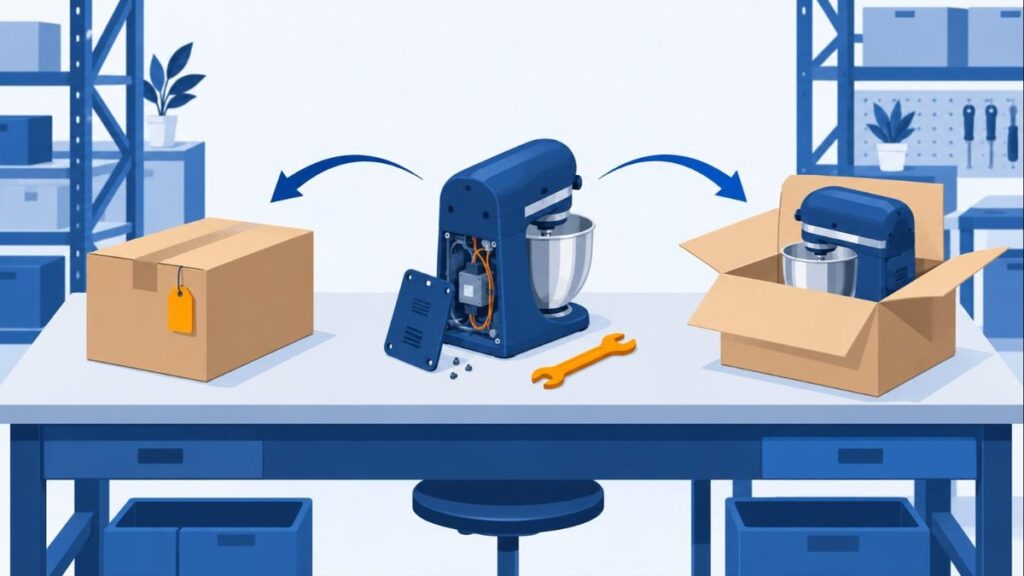
Ship one container into the EU and pay duty and import VAT only on the goods you release for sale, when you release them. The rest waits under customs supervision in our customs warehouse in Poland: released in parts, picked and packed for EU orders in the same building, or re-exported without EU duty.
Write to us in English. We reply in English.
Release stock in parts, as you sell
Re-export without EU duty
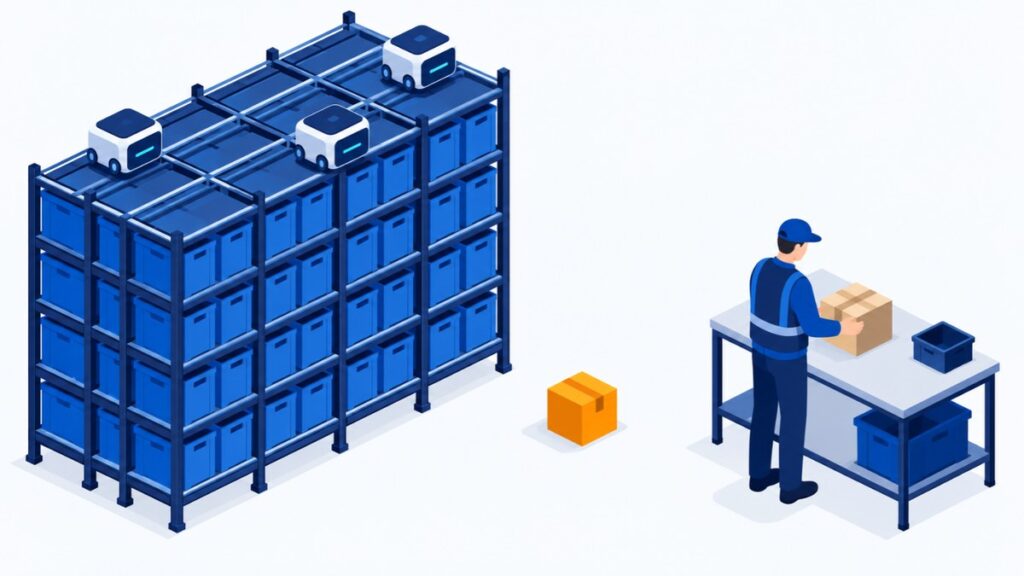
D2C fulfillment from the same site
A4 One container in, three ways out
What a customs warehouse in Poland does, and what it does not
A customs warehouse is a special procedure under the EU customs code, not a type of building. Non-EU goods are stored under customs supervision, and the import duty and VAT normally due at the border are not charged until release for free circulation. Re-export them instead and that duty is never paid.
-
Duty and VAT follow the sale, not the container
you pay when a batch is released for the EU market, in the quantity you release. -
Release in parts, on your schedule
one container can be released in tranches over weeks or months; as a rule, EU law sets no fixed time limit on the procedure. -
Re-export without paying EU duty
stock that turns out to be for the UK or another non-EU market leaves as it arrived, still non-Union goods, with no EU duty on the way out. -
Goods stay under customs supervision
every movement is recorded and reportable; that is the price of the deferral.
What it does not do
A customs warehouse solves the customs status of your goods, not everything else. We say so before you ship.
We do not accept goods on the EU military list or the dual-use lists, or anything else whose storage requires a special licence: customs warehousing does not replace that licence.
How our bonded warehouse in Poland works, step by step
From the port to the parcel, one set of records. The path a container takes under the customs warehousing procedure:
Container moves inland under transit
Your goods travel from the EU port of entry to Podgrodzie under a transit document (T1), still uncleared.
Goods-in under customs supervision
We unload, count and check against your packing list, and record every item in our warehouse management system with its customs status.
Stock waits, duty unpaid
Goods sit on our racking under customs supervision. Duty and import VAT are not due yet; you see the stock in our records.
Release in parts, straight to fulfilment
We organise import clearance for the quantity you choose. Released units go directly into pick and pack; cut-off 13:30 CET for same-day dispatch.
Or re-export
Stock for markets outside the EU leaves under export or transit paperwork, with no EU duty, because it was never released into the EU.
What can be done with stock inside the customs warehouse
Bonded does not mean untouchable. EU rules allow so-called usual forms of handling under customs warehousing: work that preserves the goods, improves their presentation or prepares them for distribution. That is what a brand needs before selling in the EU, and here it happens before duty is paid.
Three things we do with bonded stock before it is released
EU-language labels, barcodes, market-specific stickers or corrected markings, applied while goods are still under the procedure; at goods-in we verify goods and markings against your specification.
Bulk cartons broken down into retail units, products bundled into sets, inserts added, cases repacked into the format your EU customers order.
Sorting by market or channel, building pallets for a B2B customer, or staging units for release so clearance and dispatch happen the same day.
Where the line is: handling must not change what the goods are or their tariff classification. Anything beyond that is a different customs procedure, and we say so before starting.
Who does what: your business, the customs agent, and us
A customs warehouse works when three parties know their part, so nobody assumes someone else is filing the declaration.
You, or your customs representative
You own the goods and, at release, you are the importer of record. A business with no EU establishment normally acts through an indirect customs representative in the EU, holds an EORI number and settles duty and import VAT at release. VAT registration is your tax advisor’s call.
Customs clearance
We organise import and export clearance and the paperwork around it, and can walk you through the EU customs rules that apply. Declarations go to Polish customs on your schedule: this batch now, the next when it sells.
CLE Commerce
We run the warehouse: goods-in under supervision, storage, stock records with customs status, permitted handling, release into pick and pack, re-export preparation, and the reporting customs and you both need. Insurance of the goods stays with you; we carry liability cover for our operations.
Bonded warehousing for EU e-commerce brands from the US, UK and Asia
This is what non-EU brands mean by import fulfillment in Poland: bonded storage and day-to-day e-commerce fulfilment under one roof, so a released unit never needs a second truck to reach the pick face.
-
US brands shipping ocean freight who want to test EU demand without paying duty on a season’s stock up front.
-
UK brands that lost their single-market position and now import into the EU: one bonded stock pool in Poland serves all 27 markets.
-
Asian manufacturers and brands selling D2C or through EU marketplaces, who need EU labelling and kitting, and duty paid per release, not per container.
-
Same building, two stock states. Bonded and released stock are kept apart physically and in the records; release is a status change and a short move, not a shipment. Carrier costs are re-invoiced at cost, no margin.
IOSS or OSS? Why the bonded model is different
Selling into the EU parcel by parcel, you probably know IOSS: goods sent from outside the EU directly to a consumer, order by order, up to the low-value threshold (EUR 150). The bonded model is different: your goods are imported into Poland in bulk when released, and a later sale to a consumer in Germany or France is an intra-EU distance sale, usually reported through OSS.
Not tax advice: we describe the mechanics so the talk with your advisor starts from the right picture. See also e-commerce fulfillment in Poland, cosmetics and supplements, all run from the same site. Once goods are cleared, EU-wide delivery follows the cross-border fulfillment setup, and the cost side is explained on fulfillment pricing in Poland.
Talk to us about customs warehousing in Poland
Tell us where the goods come from, what they are, how they arrive (pallets or loose cartons), roughly how many SKUs, and whether part may be re-exported. We come back within 24 h with a quote and a straight answer on fit.
Customs warehouse in Poland: questions and answers
Can I release my goods from the customs warehouse in parts, or does the whole shipment clear at once?
In parts. Release for free circulation is done per declaration, for the quantity you choose, so one container can go out in several tranches over weeks or months. Duty and import VAT are charged per tranche; the rest stays under customs supervision, with no general time limit under EU law.
Who is the importer of record when I use your customs warehouse in Poland?
You are, or a customs representative acting for you. We hold and handle the goods but do not become their owner or importer. A business with no EU establishment normally appoints an indirect customs representative in the EU to lodge declarations for it, and the importer settles duty and import VAT at release.
Can I re-export part of the stock outside the EU without paying EU duty?
Yes. Goods under customs warehousing are still non-Union goods, so stock you send to the UK, Switzerland or back to the origin market leaves under export or transit paperwork without EU import duty ever being charged. Only units released into the EU market pay duty and import VAT.
Does the customs warehouse let me use IOSS for my EU orders?
No, and that is by design. IOSS covers goods sent from outside the EU directly to a consumer, order by order, up to the low-value threshold. Here your goods are imported in bulk into Poland when released, and later sales to EU consumers are intra-EU distance sales, usually reported through OSS. Your tax advisor confirms which applies.
Do I need an EU VAT registration or an EORI number before shipping a container to you?
An EORI number is needed to deal with EU customs, and whoever acts as importer needs one before the first declaration. Whether you also need a Polish or other EU VAT registration depends on how and where you sell; that is your tax advisor’s call. We tell you what documents the warehouse needs and walk you through the customs steps.
Can you label, repack or bundle goods while they are still under customs control?
Yes, within the usual forms of handling permitted under EU customs rules: labelling and marking, verification of goods and markings, repacking, sorting, kitting into sets and preparing units for onward distribution. Anything that changes what the goods are or their tariff classification is outside the procedure, and we say so before starting.
Can you run my day-to-day D2C fulfillment from the same warehouse as the bonded stock?
Yes, that is the point. Bonded and released stock sit in the same 6,500 m² building, kept apart physically and in our warehouse management system. A released batch moves into the fulfilment area, shows as available in your Shopify, WooCommerce, Amazon, Allegro or TikTok Shop channel through our integration hub, and ships EU-wide with the 13:30 CET cut-off.
Are there goods you will not take into the customs warehouse?
Yes. We do not take goods on the EU military list or the dual-use lists, or anything else whose storage requires a special licence, because customs warehousing does not replace that licence. If your product carries such a classification, tell us before shipping and we confirm rather than guess.
Bring one container into the EU, pay duty on what you sell
Bonded storage, permitted handling, release in parts and e-commerce fulfillment from one warehouse on the A4 in southern Poland. Tell us what you ship; we come back with a plan and a quote, no obligation.
Get a quote
Write to us in English. We reply in English. Polish-speaking businesses can use our Polish customs warehouse page.